Showing posts with label exhibitions. Show all posts

Wednesday, 20 October 2010

The British Face


I just watched this DVD which I bought from the National Portrait Gallery in August. It follows the actress Fiona Shaw as she examines the concept of portraiture and is divided into 2 sections.

1. Portraits & the Artist
This is about the relationship between the artist and the sitter. It concentrates on the intent of the artist, and there is a general consensus that the artist is trying to capture the 'character' or 'essence' of the subject. It is suggested that this is perhaps why passport photographs are not usually referred to as portraits.

The artist Stuart Pearson Wright talks about the intimacy between artist and subject who often do not exchange words. I thought this was an interesting idea because, on the one hand not speaking to someone you are spending time with can be difficult unless you are very comfortable with each other (assuming that the silence is not because you have fallen out!). But I have found that taking photographs of people without giving them immediate feedback can sometimes unnerve them. I suppose it depends on how comfortable they are about having their picture taken, and their expectations of the end result.

Stuart Pearson Wright discusses the tension between flattery and the truth. He avoids the former because this might imply that the subject is defective in some way. This differs from the approach taken when photographing celebrities where true likenesses are often cast aside in favour of what a film company or product manufacturer might want.

Francis Bacon took an expressionist approach and painted friends and lovers in their absence as he remembered them. These were not always well received, in fact Cecil Beaton destroyed Bacon's painting of him, such was his dissatisfaction.

The photographer Rankin said that photography was about creating 'visual lies' and his objective was to try and get to the truth. In order to do so, he would have a character or narrative in mind while taking the photograph.

2. Portraits & the Nation
This puts portraiture in a wider context and starts with the history of it. It was suggested that originally, portraiture had 3 main purposes: commemoration of the dead, representation of an icon and the celebration of an individual.

The subject of symbolism is introduced by Gerald Scarfe who uses this in his caricatures, and again the notion of 'the truth' and what it constitutes, is mentioned.

I personally think the idea of truth is both subjective and contextual. Everyone has their own interpretation of the truth and this can be affected by external influences.

The final part of the DVD is about the history of the National Portrait Gallery. It was founded to celebrate the achievements of notables who had been deceased for at least 10 years. Therefore, it was focussed on the past, and careful consideration was given as to who was considered worthy enough to have their portraits displayed in the gallery. In the case of scientists and some writers, their portraits served to illuminate their biographies in the case of those who were not immediately recognisable.

Over time, the range of exhibits has widened to include sculpture and photography, and the trustees have allowed the admission of living sitters since the 1960's. During the 1980's the gallery began to commission works of art so they are now creating it as opposed to simply collecting it.

What have I learned?
Portrait photography is a relatively new venture for me and I really like the idea of trying to capture the character of the subject. I read a comment from a wedding photographer once, who said that their aim was to try not to make the subject look like someone having their photograph taken.

I have been asked to do a photoshoot for a friend and her children next week, and in the first week of November I am doing a shoot for a dance group. Two very different types of image but in many ways very similar. Building a rapport with a subject is certainly important and the DVD has given me some ideas on what my psychological approach could be.

Monday, 13 September 2010

New York

I got back to the UK last Friday, after spending 10 amazing days in New York. I went there for the 10th annual salsa congress and spent some time afterwards sightseeing and (of course) taking photographs.

I visited the International Center of Photography, which was initiated by Cornell Capa (Robert Capa's brother) and is the world's largest photo museum and photography school.

I was particularly interested in the sections about black people in the media. There were several photographs covering the activities of the Civil Rights Movements and the ways in which they used photography to inform and educate their followers. There were some very powerful images of Martin Luther King at his rallies and the infamous picture by James Louw of Marting Luther King lying fatally wounded on his motel balcony.

It was stated that Malcolm X staged scenarios in which he would be photographed to spread the message of the Nation of Islam.

The mother of Emmet Till used photographs of Emmet's battered corpse to show the realities of racism in America in 1955. The men accused of his murder were acquitted, and the case would probably have been forgotten had it not been for the graphic photographs. In fact his murder was one of the catalysts for the inception of the Civil Rights Movement, no doubt the photograph had much to do with that as well.

What have I learned?
The nature of some of the images really highlighted the impact of photography. Many were photojournalistic in nature, and although they were not necessarily taken for publication, many ended up on the covers of magazines.
The images told stories in ways that words probably could not have done at that time, since members of the target audience may not have had the prerequisite reading skills. These photographs really highlighted the use of photography as a means of communication as well as recording historic events.

Friday, 23 July 2010

Location Lighting Techniques Seminar Tour

I will  attending this event today hosted by the legendary Joe McNally! It's taking place at the Business Design Centre in Islington and I'm really looking forward to it. This is the itinerary:


Off Camera Flash Essentials
10:00 to 11:00 A.M.

It all starts with getting the flash off your camera to create directional light. In this session you’ll learn how to:
1) Set up and control your flash so it doesn’t look like you used “flash” at all. 2) Use Sync Speed to your advantage to mix your flash and the ambient room light for more natural–looking images. 3) Recognize the relationship of your camera’s built-in meter to the flash settings. 4) Diffuse light from a flash to give you that large softbox look on location without using one. 5) Handle emergency situations when you have to use your built–in pop–up flash. 6) Control the direction and power of your flash, and limit where the light goes using some simple add–ons.

Multiple Flash: The Next Step
11:15 A.M. to 12:15 P.M.

Joe shows you how easy it is to add a second wireless flash to take your look to the next level. You’ll learn how to: 1) Get your flashes to talk to each other wirelessly and learn how easy it is to use more than one flash using controls already in your camera. 2) Control your flash right from your camera position, allowing you to work faster and smarter. 3) Use Joe’s own power ratios for quickly setting up creative off–camera lighting effects that really work. 4) Use Joe’s strategy for starting with one flash, and then exactly how and when to add a second (or third) flash. 5) Quickly and easily set up multiple flashes on location and break your fear of using more than one flash.

LUNCH BREAK
12:15 to 1:15 P.M.

Great Portraits with Multiple Flash – Live Portrait Sessions
1:15 to 2:15 P.M.

If you shoot people, this session is going to blow your mind, as Joe does a live portrait and an athletic editorial–style portrait shoot right in the class! You’ll see the entire process from beginning to end. He’ll cover: 1) The “15–minute executive portrait for tight deadline;” the bread and butter of many commercial shooters. You’ll see exactly what to do to maximize your time and profits shooting on location. 2) Analyzing the location and establishing a gameplan. 3) How to shave 5 minutes off this 15–minute timeline for on–location athletic style portraits. You’ll be amazed at what you can do in 10 minutes! 4) Secrets for working with rim light, fill light, the main and background lights.

Unleashing the Power of Your Flash
2:30 to 3:45 P.M.

Joe uncovers the hidden power of your off–camera flash, along with a few advanced techniques that will open up a whole new world, including: 1) Which controls on the flash you need to know about, including which are critical to moving you to the next level and which you can ignore. 2) Which syncing options really work and how to use them to your advantage. 3) Exactly when and why to use Front Curtain Sync, Rear Curtain Sync, Slow Curtain Sync, and how the pros use these to create a pro–look when shooting flash. 4) The next level of diffusion, when to use Wide Area Adapter and when to zoom the flash manually. 5) How to work with gels and get realistic–looking color from your flash. 6) Advanced Off–Camera Flash Techniques like FP High–Speed Sync Mode which allows you to sync your flash well beyond the top sync speed–great for shooting in bright sunlight outdoors when you want to stop motion.

Bringing out the “Big Guns” – Intro to Big Lights on Location
4:00 to 5:00 P.M.

One of the most popular trends in pro–lighting is to take your studio lighting on location, and now that you understand how off–camera flash works, this is surprising easy. In this session you’ll see how to: 1) Decide when to use Big Lights versus small off–camera flashes and how this affects the quality and quantity of light. 2) Incorporate the lighting tools for Big Lights to control and direct your light, including using very large soft boxes, mid–size soft boxes, and a Beauty Dish for the look the big magazines are looking for. 3) Light a group portrait. Joe takes one of the most intimidating lighting challenges and makes it so and quick and easy, you’ll never shy away from lighting a group portrait again. 4) Take all the techniques you’ve learned today and bring them together to know “what is good light,” and how to create it consistently and predictably on–location or in the studio, regardless of which type of flash you use. 5) Joe’s shortcuts, workarounds, and real–life tricks–of–the–trade that he uses every day in his work to make the most from his time behind the camera. You’ll be able to take these same techniques and put them to use today guaranteed!

What have I learned?
It was good to see a highly rated professional go through a variety of lighting settings in real time. Very few of them worked first time, and Joe made the point (several times) that mistakes are normal. There is alot of trial and error involved so I think this will help me to be less disappointed when I don't get the best results.

There was one particular scenario where Joe had placed the male model in the audience. It was supposed to represent a corporate shot of an executive amongst the shareholders. He then had to light the model, allow some ambient light for the 'shareholders' and he had a speedlight with a blue filter lighting the wall in the background. He spent well over 20 minutes on this and, although you probably wouldn't get way with that in the field, it was interesting to see him come up against the same problems as the rest of us. But he was able to talk us through what was going on and think aloud as to what he could try to fix the various glitches.

I also have a better understanding of the different modes and when to use them. Joe McNally said he always starts with TTL, but he expects to switch to manual whenever it fails. He also showed us a sequence of stunning photographs, and they were not all lit from the front.

Overall, I've come away with a renewed confidence in using speedlights and I'm looking forward to using light in more interesting ways.

Wednesday, 14 July 2010

"Siren City"

This was the title of an exhibition I went to yesterday evening at the Estorick Collection. It consisted of 50 black and white photographs of Naples taken by Johnnie Shand Kydd between 2000 and 2008. He chose to use a Rolleiflex (square format film camera) because he thought this would convey the ambience of the city better than a digital camera.

His images reveal a darker side to the city and highlight the significance of ritual, religion and superstition to its inhabitants.

The images were divided between 2 galleries, and in each room we were given a narrative. One of the narrators was a young lady who worked for the Magnum agency and was able to put the images into context by commenting on composition, lighting and texture and making references to other photographers and cinematographers (eg Fellini).

The other narrator was a friend of Johnnie Shand Kydd who was able to give us insightful and amusing anecdotes on the stories behind the images and the thought processes of the photographer.

It was interesting to get 2 different perspectives and the ability to ask questions was a unique opportunity. The next best thing to speaking to the photographer himself.

Naples is known as the Siren City because of the legend of Parthenope who tried (unsuccessfully) to seduce Ulysses with the beauty of her song, then threw herself into the sea, only to be washed up at the place that later became known as Naples.

Friday, 25 June 2010

"Skin"

Today, on my way to Regent's Park, I made an unscheduled visit to an exhibition at the Wellcome Collection. It looks at the largest organ in the body from cultural, scientific and artistic points of view.

Although most of the exhibits were originally produced for medical/educational purposes, it wasn't difficult to see them as works of art as well. Tattoos, skin diseases, disorders, wrinkles, bruises and scars are represented as paintings, photographs and even ceramics. The basic elements of design were ever present - lines, shapes, patterns, rhythms and colour.

I was particularly interested in the photographers of Margi Geerlinks who uses image manipulation to produce thought-provoking and humorous images of the human form.

A fascinating exhibition.

Tuesday, 6 April 2010

"Irving Penn Portraits"

This is an exhibition at The National Portrait Gallery, that runs until 6 June. It documents his work from the late 40's the 2007 and there is a very definite change in style during that period. His earliest work features full-length shots of very famous sitters posing on old pieces of carpet and wedged in alcoves - it's quite bizarre.
He then made a transition to headshots which became more dynamic as time passed.

The quality of the images is outstanding and I found it personally enlightening to see what people like Rogers and Hammerstein actually looked like. It seems that anyone who was anyone, was photographed by Irving Penn!

Friday, 19 March 2010

"Shifting Perspectives"

I went to the gallery in the Oxo Tower today. I vaguely remember reading that there was on exhibition on, but I couldn't remember what it was about. I learned that this is in its sixth year and looks at the lives of people with Down's Syndrome.

In one section, there is a write-up about a woman who gave birth to a child with Down's Syndrome, and was told that she would not be able to breastfeed since it would be 'too difficult'. She persisted and was successful, and this spawned a collection of images of various women breastfeeding. The aim of which is to both highlight and celebrate the importance of breastfeeding.

In another section a number of young people with Down's Syndrome have been photographed with objects that they see as representing their human rights. The objects are interesting - a cinema pass, a mobile phone, a cookbook and many others. The accompanying stories are both insightful and amusing.

The pictures are of very high quality but I was more interested in the subjects and the stories they had to tell. For once, I wasn't really thinking about rules of composition, colour and lighting, although I found the pictures aesthetically pleasing so perhaps they were being registered subconsciously.

Saturday, 13 March 2010

"A Positive View"

I went to this photography exhibition at Somerset House this morning, which includes over 100 images from photographers such as Henri Cartier-Bresson, Norman Parkinson and clients of the charity Crisis. The exhibition is to raise awareness of the charity. The images are mainly portraits with the occasional landscape and still life.

What have I learned?
I've developed more of an appreciation for the quality of film photography and can now see that some images are better suited to this gritty medium. I will experiment with some of the film filters in Nik Efex Color Pro 3.

Wednesday, 3 March 2010

Exhibitions

My tickets have arrived for the Irving Penn exhibition at the National Portrait Gallery (6 April). I don't know much about him, apart from working for Vogue magazine in New York, but I'm looking forward to seeing his work.
I've also just received my pass for Focus on Imaging 2010 courtesy of the OCA! and  will be my first visit. This is my wishlist:

1. Meet the OCA staff
2. Get advice on how to promote a website once it's established
3. Buy a Sekonic light meter (L308-S or L358)
4. Buy a VR panoramic head (Nodal Ninja if I can find one)
5. Buy a Nikon flash remote cord (SC-28)
6. Buy a Nikon SB-800 or SB-900
7. Circulate my business cards

If I can achieve a couple of the above, then I'll be happy. However, I have a feeling that I'll probably end up coming home without achieving any of the above, but having bought all sorts of other unplanned items!

Tuesday, 16 February 2010

The Photographer's Gallery

I took the opportunity to visit this gallery as it rained heavily and I was therefore prevented from taking any pictures. I wasn't terribly impressed by what I saw - nothing particularly inspiring and very repetitive!

Monday, 15 February 2010

"Points of View - Capturing the 19th Century in Photographs"

This exhibition at the British Library opened on 30 October 2009 'til 7 March 2010, and was on my list of things to do, so I thought I'd better do it!
It starts with the obvious - the invention of photography and the various methods developed for capturing images. There are a couple of videos showing how labour intensive this all was. It then moves on to show how photography was used throughout the 19th century:

  • To record the growing interest in ancient civilisations, and there are some fantastic shots of Egypt, India and Burma
  • Anthropology, to record medical specimens and compare ethnic groups for research and teaching
  • Potraiture - this was primarily wealthier households who began to compile family albums
  • Panoramic imagery - fairly crude but impressive nonetheless
  • Muybridge sequences which were hailed as the precursor to the moving image
  • War and its aftermath, eg the Crimean
  • Urban renewal eg the construction of the Crystal Palace
The final section is callled 'photography for all' and illustrates the impact that Kodak had on making photography more accessible to the masses.

What have I learned?
I noticed that there were no examples of photography purely for art's sake, so I suppose that back in the 19th photography was more purposeful. Possibly due to the time and costs involved in producing each image?

Sunday, 17 January 2010

SWPP Photographic Convention

I went along to this at the Novotel in Hammersmith. The majority of exhibitors were selling frames and print services, but I saw some really good demonstrations of Nik's Viveza, On One's Mask Pro and Animoto.
I bought Viveza and Define (academic versions), which were massively reduced, and took out a subscription to Animoto, who gave me 15 months for the price of 12.
The Animoto software is just what I was looking for to create promotional videos for when my website goes live. It will save me alot of time and technical expertise!

Saturday, 21 November 2009

Manchester Weekender - Part 1

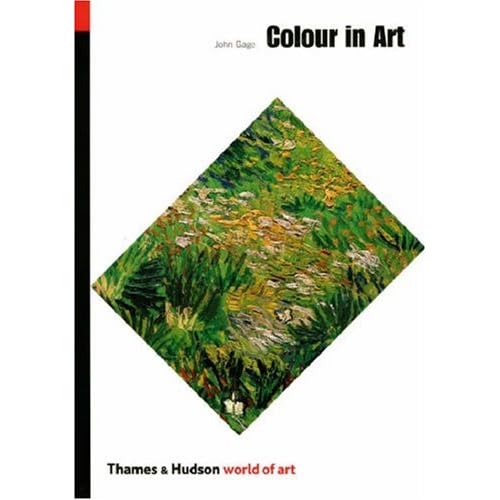
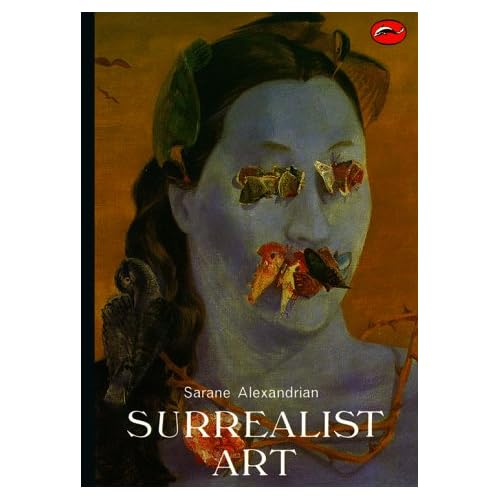
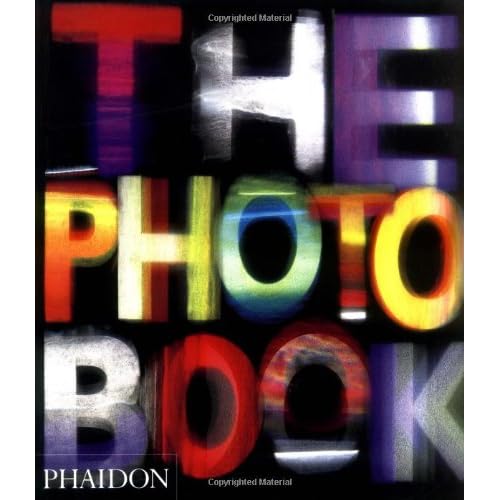
I'm in Manchester for a salsa festival and spent the morning in Manchester Art Gallery. I bought 3 books:

The Photography Book
This showcases the work of 500 photographers and gives a precis of some of their most iconic work.


Colour in Art by John Cage
This discusses the impact of colour in art and various themes from an artist's perspective.


Surrealist Art by Sarane Alexandrian
This looks at the development of the genre and discusses the work of various artists.


What have I learned?
I wasn't really interested in paintings before, but I now see less distinction between paintings and photography. The same basic principles apply - composition, colour and balance etc.
I think infrared may be a form of surrealism and I would like to explore this further by reading and experimentation.