Showing posts with label reading. Show all posts

Thursday, 6 January 2011

Posing Techniques

I need some ideas for posing models so I have purchased the following from Amazon:

Posing Techniques for Photographing Model Portfolios


Most of the models I've worked with have clear ideas about poses and the looks they want to achieve, but thinking ahead to the photo sessions I will be doing with friends I will have to give more direction.
I'm particularly interested in learning about ways to place the hands and using the body to create shapes that look natural.

Friday, 30 July 2010

Background Reading


I received this book a couple of days ago having pre-ordered it at Focus on Imaging in March. It is very well written and contains some beautiful shots. Kerry gives sound advice, but the book is not in any way prescriptive.

What have I Learned?
The thing that stood out for me was the number of wide angle shots and the impact this has on telling the story of the day's events. I have a tendency to zoom in on what I see as the most important parts of a frame, but this has helped me to see that there is an advantage in stepping back and incorporating other subjects which sometimes provide balance or perhaps show an interesting contrast. If there is any zooming in to be done, the image can always be cropped later on.

Monday, 7 June 2010

Background Reading

The Hot Shoe Diaries: Big Light from Small Flashes

There is a range of subjects and scenarios discussed in the book, and I like the fact that Joe McNally talks about difficulties and mistakes that he has made. This is not something that professional photographers do as a general rule!
The book includes several simple lighting set-ups that can be replicated without resorting to expensive strobes and the accompanying accessories.
What this book has really helped me to do is pre-visualise how I want my final image to appear, and light it accordingly. I've also learned about 'reverse engineering' to learn techniques from the way that other photographers have used available light.
Thanks to this book, I am getting better at softening the light and shadows from my flashgun so it is not obvious that flash was used.


For anyone new to wedding photography (like me!), this book gives lots of ideas on posing. It takes a range of factors into consideration such as the lighting, the setting, the relative sizes of the bride and groom, group sizes etc.
It's not specifically aimed at inexperienced photographers, so there are literally hundreds of ideas for the seasoned pro as well. I expect to get several years service out of this book. The range and quality of photography is impressive, with many well known wedding photographers included.
The book is relatively small in size so that it can easily fit into a kit bag. I don't know of any other publishers who have thought of this and I think it's a brilliant idea!
I pre-ordered this book at Focus on Imaging 2010 and was not disappointed. There is another book in the series on wedding photojournalism which is due out in July - I'm looking forward to that too.

Saturday, 5 June 2010

Colour Relationships

Yellow:Violet (1:3)
I decided to revisit this after reading a comment by Michael Freeman in "The Photographer's Eye." He says:

"Violet ...is easily confused with purple."


I think my beetroot image is definitely purple. So 2 days ago I went in search of violet, and took this shot through the window of a shoe shop in Central London. There was also a pair of purple trainers in the same display, so I could immediately appreciate the difference in tones.


I cropped it in Photoshop to achieve the required ratio.


I consider myself very fortunate to have found a violet shoe with a yellow lining, although in Summer fashion styles it seems to be a popular combination.

Wednesday, 12 May 2010

Background Reading


This book covers alot more than many of the other books that I have read on composition. As expected, it has sections on the golden ratio, frames within frames, and perspective, etc. But it also discusses how to incorporate blur, bokeh, narration and abstraction into an image for creative effect.
I found the section on rhythm particularly useful since I wasn't totally clear on how to show this in an image as a separate entity from pattern - I have to do this for the OCA assignment that I'm currently working on.

This is what the author says:
"Rhythm generally refers to a composition with a pattern that gives the viewer a sense of motion."

This has been very helpful. My understanding is that, while it is possible to show pattern in isolation (perhaps as an abstract), it is not possible to show rhythm without some form of pattern.

Sunday, 11 April 2010

Background Reading


I have been asked to photograph a wedding in the Summer, so this is one of a few wedding photography books that I bought from Amazon. I have to say, this book is an absolute Godsend!
I have declined requests to take wedding photos up until now, because I always think of this type of photography as dull and restrictive from a creative point of view.
However, this book shows a fresh approach to wedding photography, it's loaded with tips and advice and all of the settings for the various shots. The pictures are imaginative and the quality is impressive. Many of the shots have won awards, which is not the least bit surprising.


I bought this book because the use of flash is my Achilles Heel! Most photographers advise us to get the flash off the camera, but if you are working in a venue such as a church, taking pictures 'on the fly', you haven't the luxury of setting up stands and umbrellas etc.
This book explains how to bounce flash properly, ie the angle as well as the direction. I also have a better understanding of using fill-flash outdoors and exactly when to use it and what to do with the diffuser that came with my flash.


I have been converting an increasing number of my infrared images to black and white, thanks to this book. There are many ways to convert an image, that I was aware of, but not the subtle differences between them. I also learned about different ways to sharpen an image, that I did not previously know about.
I'm also thinking about incorporating duotones and tritones now that I have seen the effects of them.


I always attempt panoramic shots when presented with an appropriate landscape, but I have had some problems with distortion due to parallax error. This book is perhaps a little too technical for me, but certainly helped me to choose a suitable VR tripod head and stitching software that allows more manual control than Photoshop.
It includes some helpful case studies that walk you through the entire process from image capture, stitching, manipulation, and fine-tuning to output.

Sunday, 3 January 2010

Background Reading

When I was in Greenwich on Thursday, I went to Waterstone's and bought the following:

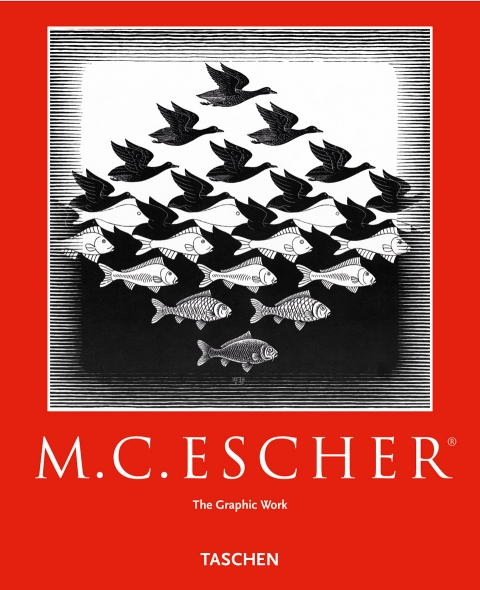
M.C.Escher - The Graphic Work
This book contains 76 reproductions which are introduced and explained by the artist himself. I have long been fascinated by his work, and thought it would be interesting to discover the thinking behind it.

M.C. Escher - The Graphic Work

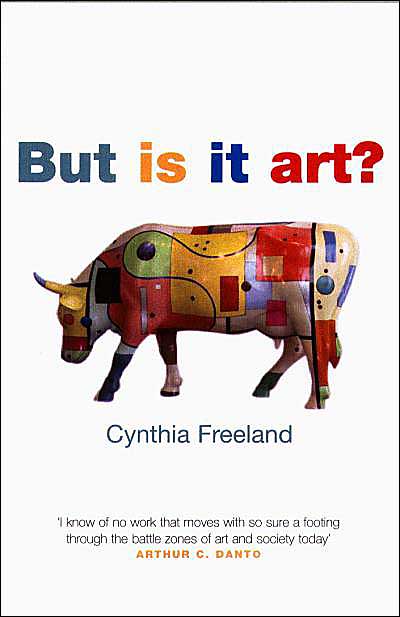
But is it Art? by Cynthia Freeland
This book looks at innovation and controversy in art. The concept of art is both emotive and subjective, and I thought this book might help me to understand why some items are considered 'art' as this has perplexed me in the past.

Cover Image

Photo Idea Index by Jim Krause
I bought this after briefly flicking through the pages because, unlike many other photography books that tell you the 'correct' way to do things, this one just looks at alternative ways of presenting a subject.


I also ordered the following from Amazon:

Dali by Catherine Plant
I have several posters depicting Dali's work, but I wanted to read something that would give an insight into his incredible mind.


Surrealism by Cathrin Klinsohr-Leroy
I don't know much about this subject, though I like surrealist artwork. This book dicusses artists that I am not familiar with and showcases their work.


Dadaism by Dietmar Eiger
Dadaism was a forerunner of surrealism, and since I know absolutely nothing about this, I'm using this book to give me a brief introduction to it.

Dadaism (Taschen Basic Art Series)

Wednesday, 16 December 2009

Shopping for accessories


I'm currently reading The essential colour manual for photographers by Chris Rutter, which covers just about every aspect of colour management - colour theory, calibrating hardware, dealing with different/mixed light sources, seasonal variations in natural light and post-processing techniques. As a result, I ordered a Pantone Huey monitor calibrator. I also ordered a Manfrotto monopod to experiment with in the new year - I've never used one before. I'm looking forward to seeing what difference (if any) these purchases make to my photography.

Saturday, 21 November 2009

Manchester Weekender - Part 1

I'm in Manchester for a salsa festival and spent the morning in Manchester Art Gallery. I bought 3 books:

The Photography Book
This showcases the work of 500 photographers and gives a precis of some of their most iconic work.


Colour in Art by John Cage
This discusses the impact of colour in art and various themes from an artist's perspective.


Surrealist Art by Sarane Alexandrian
This looks at the development of the genre and discusses the work of various artists.


What have I learned?
I wasn't really interested in paintings before, but I now see less distinction between paintings and photography. The same basic principles apply - composition, colour and balance etc.
I think infrared may be a form of surrealism and I would like to explore this further by reading and experimentation.

Sunday, 15 November 2009

Background reading

I started reading The Photograph by Graham Clarke. The first chapter is "What is a photograph?" It discusses the purpose of a photo and the objectives of the photographer.


What have I learned?
There's so much more to a photograph than I'd previously considered:
What's included?
What's excluded?
The 'story' behind the image (open to interpretation)
The photographer's intent - Why was it taken? How should it affecct the viewer?

Things to do:
The Photographers' Gallery, Ramillies St
British Library - "Capturing the 19th Century in photographs" 30/10/09 - 07/03/10